


South Korea’s middle-power diplomacy is entering a period of reassessment. Most concern is centered around questions about US security commitments, declining leverage over Pyongyang, and a push for greater defense autonomy. President Lee Jae-myung has framed his foreign policy around the concept of “pragmatic diplomacy”, seeking to preserve the US alliance while expanding Seoul’s diplomatic flexibility and strengthening relations with key partners.
To this end, Australia’s Pacific diplomacy strategy could offer valuable lessons for Seoul.
While Canberra remains firmly anchored to its alliance with the United States, it has simultaneously built an extensive network of bilateral security partnerships throughout the Pacific. This strategy has accelerated over recent years, with Australia concluding security agreements with Papua New Guinea, Tuvalu, Nauru, and Vanuatu.
The Ocean of Peace Alliance signed last month makes Fiji Australia’s fourth formal treaty ally, along with PNG, New Zealand and the United States. Unlike most of the other Pacific agreements focused primarily on capacity-building or policing, the Fiji treaty includes mutual defense obligations in response to armed attacks within the Pacific.
The broader lesson for Seoul is not to replicate Australia’s Pacific strategy geographically, but to adopt its underlying logic of networked defense diplomacy.
South Korea has already begun taking tentative steps in this direction: it has institutionalized trilateral cooperation with Washington and Tokyo through the Camp David framework, deepened engagement with Southeast Asia via the Korea–ASEAN Solidarity Initiative, and pledged expanded maritime cooperation with the Philippines. Together, this offers a foundation for a wider network of partnerships, built incrementally rather than from scratch.
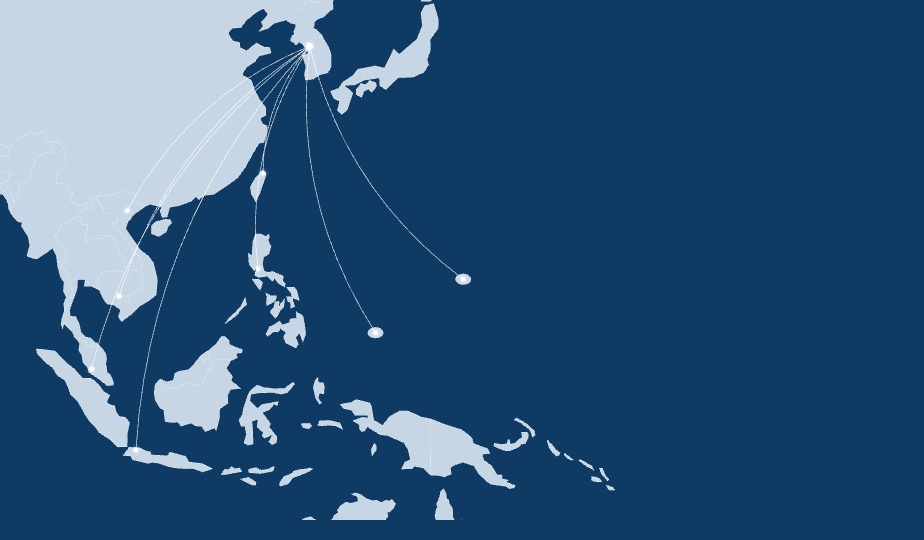
In addition to its long-held bilateral deterrence security framework anchored in the US–ROK alliance, Seoul could expand defense cooperation with key regional actors including Japan, Australia, the Philippines, Vietnam, Singapore and potentially selected Pacific Island countries. This could be achieved through defense dialogues, intelligence sharing, defense-industrial cooperation, maritime security assistance and regular joint exercises.
Such arrangements would not necessarily constitute formal alliances, but they could gradually build a web of relationships that increases South Korea’s diplomatic influence while more broadly distributing regional security responsibilities. South Korea has also emerged as one of the world’s leading arms exporters, providing military equipment to countries in Europe, Australia and several Southeast Asian states. Integrating defense exports with long-term security partnerships could also allow Seoul to transform commercial defense relationships into broader strategic partnerships.
A more networked approach could also reduce, though not eliminate, South Korea’s dependence on the United States. The US alliance would remain the cornerstone of South Korean security, particularly given North Korea’s nuclear capabilities. However, diversified security relationships would provide greater resilience during periods of uncertainty in Washington while demonstrating that South Korea is a regional security contributor. This objective aligns closely with Lee Jae-myung’s emphasis on pragmatic diplomacy and greater autonomy without abandoning the alliance framework.
Such a strategy could also help offset the deepening – if informal – coordination among North Korea, Russia and China with a dense web of middle-power partnerships building collective resilience, short of a direct counter-alliance.
The benefits of expanding defense partnerships are real, but Australia’s experience also reveals the limits of such a strategy. For all its treaty-making, Canberra has not displaced China’s influence in the Pacific, and Pacific island governments are selective as external powers compete for their alignment. The pace of these deals has also drawn criticism closer to home: Pacific civil society groups warn that the region’s Ocean of Peace concept, originally framed around locally led peacebuilding, is being redirected toward externally driven deterrence against China – a reminder that a widening network can mask shallow legitimacy.
South Korea faces a further constraint: lacking Australia’s geographic advantage, it must keep most of its diplomatic and military resources fixed on the immediate North Korean threat, leaving relatively less bandwidth for sustained regional engagement. The partners differ, too. Australia extends guarantees to small, dependent states, while Seoul’s would-be partners are mostly middle powers with relatively strong militaries, making for looser, less binding cooperation among peers rather than the more asymmetric relationships that dominate the Australian approach.
Domestic politics further compound the difficulties. Although defense cooperation with Japan has continued under Lee, he has called an Acquisition and Cross-Servicing Agreement with Tokyo “practically necessary” yet unfeasible for now given unresolved historical grievances.
Seoul’s sharp partisan swings also undercut the continuity that durable partnerships require, compared with Australia’s relatively consistent policy on the Pacific islands across recent administrations.
Another key issue is China. While Australia’s strategy is aimed primarily at constraining Chinese influence in the region, a South Korean-led network aimed, however implicitly, at weakening Chinese interests could backfire.
China is South Korea’s largest trading partner, a treaty ally of North Korea, and has previously proven its willingness to punish Seoul harshly over military moves it deems threatening. Seoul would therefore need to frame any expansion of its defense partnerships as broadly defensive rather than aimed at containing a single power – a delicate balancing act.
Even a modest, carefully calibrated version of Australia’s Pacific diplomacy – deeper defense dialogues, intelligence sharing and joint exercises with willing partners – could expand Seoul’s strategic options, distribute regional burdens, and establish it as a more consequential Asia-Pacific actor in the long term.
This article was originally published by the Lowy Institute’s Interpreter here.
Thank you for this incredibly sharp and balanced analysis. You hit the nail on the head regarding the structural differences between Seoul and Canberra—particularly how South Korea’s geographic constraints and peer-power dynamics make the Australian model difficult to copy-paste.Your point about the China dilemma is critical. If Seoul pursues this "networked diplomacy," the real test will be maintaining the delicate balancing act of framing these partnerships as purely defensive stability initiatives, rather than a containment web that triggers a harsh Beijing backlash.It raises an interesting question: in an era of sharp partisan swings in domestic politics, which specific low-hanging partnerships (e.g., defense-industrial ties in Southeast Asia) do you think are the most insulated from Seoul's changing administrations?
Excellent and notably balanced analysis. The most important distinction may be between diversifying security partnerships and diversifying strategic decision-making.
A denser network can improve resilience, distribute burdens, and widen diplomatic options. But it can also generate coordination debt if intelligence access, logistics, political thresholds, and operational sustainment remain dependent on a single external centre.
Australia’s model therefore offers Seoul useful diplomatic geometry, but strategic autonomy would ultimately be measured not by the number of agreements it signs, but by how much independent decision space—and executable capacity—those agreements create under pressure.