


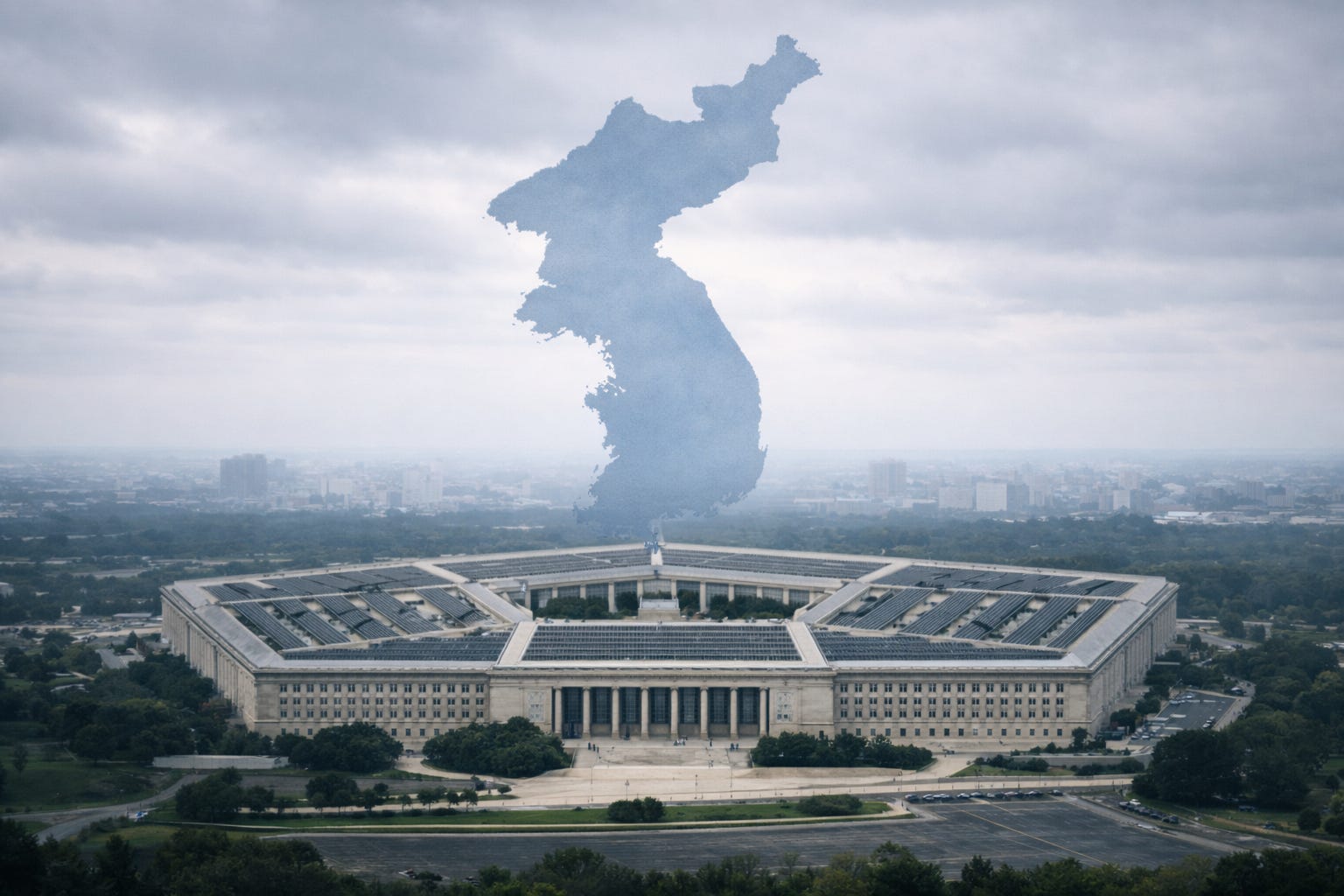
The U.S. Department of War released its 2026 National Defense Strategy on January 23. For the Korean Peninsula, it signals continuity in alliance cooperation but a meaningful shift in the balance of responsibility, with implications for deterrence posture, alliance politics, and Seoul’s strategic choices.
The NDS states that the United States will prioritize “strengthening incentives for allies and partners to take primary responsibility for their own defense” in Europe, the Middle East, and explicitly on the Korean Peninsula, with U.S. forces providing “critical but limited support.” The document underscores that U.S. cooperation will be prioritized with “model allies”—those spending adequately on defense and “visibly doing more against threats in their regions.”
Responsibility on Seoul
Under the new NDS and the Trump administration’s defense priorities, South Korea is expected to step up and strengthen its national defense capabilities to take the lead in addressing North Korea’s conventional threats. The NDS reference to “critical” U.S. support signals continued American commitment to extended deterrence, including nuclear capabilities—a pledge the Trump administration officially reaffirmed in last year’s joint fact sheet on bilateral security and trade agreements.
South Korean President Lee Jae-myung was quick to respond to the new NDS. “In the midst of an unstable international security situation, achieving self-reliant defense is the most basic of basics,” Lee wrote on X. Seoul is already moving in this direction, with the White House announcing last November that “South Korea will promptly increase its defense spending to 3.5% of GDP and purchase US$25 billion worth of military equipment from the U.S.”
In addition, Seoul seeks to achieve handover of wartime operational control (OPCON) from Washington to Seoul within Lee’s five-year term. The Trump administration’s call for allies to take greater responsibility for their defense could further create momentum for both countries to revisit the OPCON issue with renewed urgency.
The NDS language on "updating U.S. force posture" also signals potential changes to U.S. Forces Korea (USFK)'s role and orientation as part of ongoing "alliance modernization" talks. This realignment could create friction, as Washington prioritizes containing China while Seoul views North Korea as its primary security concern.
Delicate Balance
Seoul must now satisfy Washington's burden-sharing expectations through expanded military capabilities while reassuring its public that U.S. security guarantees remain credible—a complex challenge that could fuel calls for stronger conventional forces and renewed discussion of indigenous nuclear options.
Beyond the bilateral relationship, perceptions of diminished U.S. commitment may push Seoul toward closer ties with Japan, especially in terms of military cooperation and intelligence sharing.
The convergence of U.S. burden-sharing demands, Seoul’s military enhancement efforts, and potential deeper cooperation with Japan could also complicate Seoul’s fragile ties with Beijing, even as President Lee seeks to improve the bilateral relationship.
Opening for U.S.-DPRK Diplomacy?
Notably, the 2026 NDS makes no mention of North Korean denuclearization. The National Security Strategy released by the White House in December similarly omitted this long-standing objective.
This absence may be deliberate: removing denuclearization language could give Trump a greater chance at restarting stalled diplomacy with North Korea. With Trump expected to visit China in April, the omission may reflect an effort to preserve diplomatic flexibility and avoid rhetoric that could complicate potential outreach to Pyongyang.
For Seoul, however, this restraint is double-edged. While it may facilitate U.S.-DPRK engagement, it also underscores Seoul’s predicament: increased defense responsibilities without corresponding diplomatic leverage, particularly given Pyongyang’s continued refusal to engage Seoul directly.
In brief, the 2026 NDS redefines Seoul's strategic position by expecting it to assume greater responsibility for its own defense while navigating an evolving alliance framework and potential shifts in Washington's approach to dealing with North Korea. How effectively Seoul translates these pressures into concrete policy—while managing relations with Beijing, Tokyo, and Washington—will determine not only Peninsula stability but also the broader reconfiguration of Northeast Asian security dynamics.